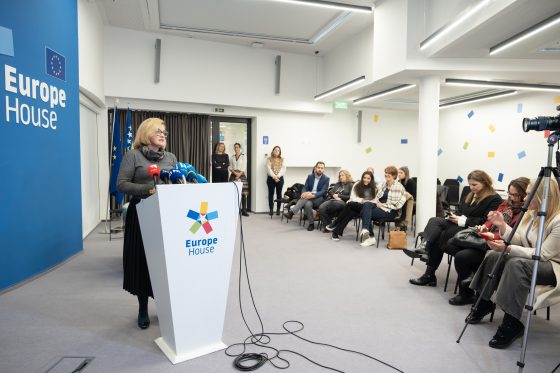
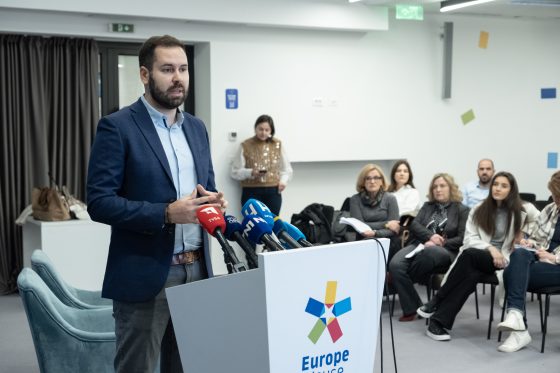
Bosnia and Herzegovina has made no significant progress in any of the 19 areas analysed in our Alternative Report on Bosnia and Herzegovina’s Progress towards EU Membership for 2025/2026. Ten areas saw backsliding, seven recorded limited progress, and two remained unchanged. These findings confirm that Bosnia and Herzegovina’s EU integration process is seriously stalled, despite the political decision to open accession negotiations with the European Union.
In the report, presented today, we highlight the absence of meaningful reforms, the lack of political accountability, and the continued weakening of institutions in the areas of the rule of law, the fight against corruption, human rights, media freedom, and the functioning of democratic institutions. Bosnia and Herzegovina has failed to establish functioning negotiating structures or ensure the implementation of key reforms that would bring it closer to EU membership.
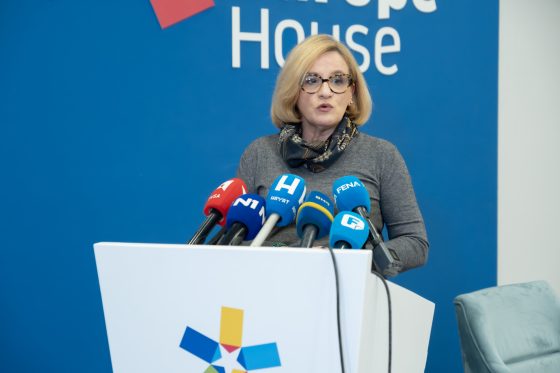
Of particular concern is the fact that legislative advances in human rights protection often fail to translate into real changes in people’s lives. Dragana Dardić of the Helsinki Citizens’ Assembly Banja Luka noted that the Federation of Bosnia and Herzegovina had taken a step forward by introducing femicide as a criminal offence in its Criminal Code and adopting the Law on Protection from Domestic Violence and Gender-Based Violence. However, the new legislation has not prevented further killings of women.
This once again raises questions about the enforcement of legal protection measures, particularly restraining orders against perpetrators of violence and controls on firearm possession.
“Prayer vigils for the protection of unborn children have continued at the University Clinical Hospital Mostar, despite the recommendation of the Federation’s Gender Centre that such gatherings must be clearly regulated by law to ensure unobstructed and neutral access to healthcare services,” Dardić stated.
The necessary progress has not been achieved in the area of LGBT rights either. A new Action Plan to Improve the Human Rights of LGBT Persons has not been adopted, while the previous plan was only partially implemented. Same-sex unions remain legally unrecognised throughout Bosnia and Herzegovina, denying people in such unions numerous rights relating to family life, inheritance, and parenthood. Meanwhile, although the Law on Temporary Child Maintenance has entered into force in Republika Srpska, equivalent legislation has yet to be adopted in the Federation of Bosnia and Herzegovina.
Serious shortcomings persist in the fight against corruption and the functioning of institutions. Edo Kanlić of Transparency International in Bosnia and Herzegovina warned that the EU integration process was effectively dead, partly because the structures responsible for coordinating it were not functioning.
Bosnia and Herzegovina has yet to appoint a chief negotiator or a National IPA Coordinator, despite the importance of EU pre-accession assistance for numerous infrastructure projects. At the same time, Bosnia and Herzegovina remains the only Western Balkan country that has not formally joined the Growth Plan, as it has neither signed nor ratified the Facility and Loan Agreements.
This puts access to approximately one billion euros allocated to Bosnia and Herzegovina at risk. Unless the country joins the Growth Plan by the end of the year, it could lose access to BAM 373 million in funding.
The inadequate implementation of the Law on the Prevention of Conflicts of Interest presents an additional problem. Implementing regulations have yet to be adopted, the Federation of Bosnia and Herzegovina has no body responsible for enforcing the law, and problems persist in Republika Srpska as well. The Agency for the Prevention of Corruption and Coordination of the Fight against Corruption is failing to fulfil its role in coordinating anti-corruption activities across all levels of government.
The judiciary has also seen no progress that would strengthen the independence and accountability of judicial institutions. Leila Bičakčić, Director of the Center for Investigative Reporting, warned that the laws on the High Judicial and Prosecutorial Council of Bosnia and Herzegovina and the Court of Bosnia and Herzegovina remained unadopted even after two years, demonstrating a lack of political will to implement key reforms.
Shortcomings in the functioning of independent mechanisms within the judiciary are particularly concerning, including those relating to judicial appointments and disciplinary accountability.
“This raises a fundamental question: do the institutions actually want an independent judiciary? We can see a lack of political will to strengthen independent mechanisms within the judiciary,” Bičakčić stressed.
The department responsible for verifying judges’ and prosecutors’ assets lacks the capacity to operate effectively. By adopting rules governing the verification of asset declarations, the High Judicial and Prosecutorial Council has further weakened the oversight system and the independence of this mechanism.
Concrete results in the prosecution of high-level corruption are also lacking. Only six indictments for high-level corruption were issued in 2025, further demonstrating serious shortcomings in institutional accountability.
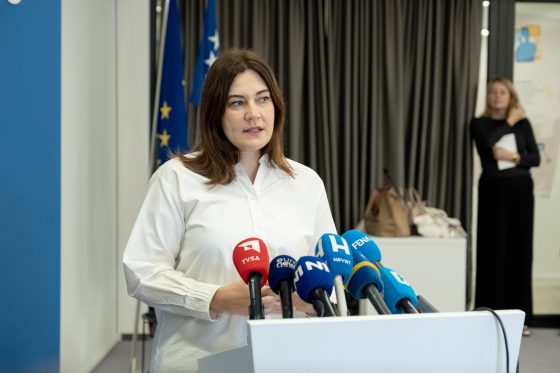
No progress has been made in the area of freedom of expression either, with specific setbacks recorded in some aspects. Maida Čulahović of the organisation Zašto ne highlighted the absence of meaningful progress in media ownership transparency, the regulation of the online sphere, and efforts to counter disinformation, as well as in ensuring the independence of the Communications Regulatory Agency.
Online platforms continue to be used to spread hate speech and disinformation, while existing self-regulatory mechanisms have a limited impact. The lack of political will continues to prevent the introduction of more effective solutions and the strengthening of institutional powers at the state level.
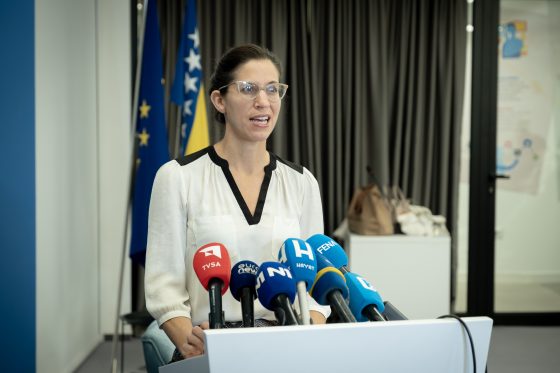
Aurelie Valtat, Head of European Integration, Political Affairs, Press and Information at the Delegation of the European Union to Bosnia and Herzegovina, also highlighted the serious standstill in EU integration, observing that the country was moving away from its European path.
She particularly stressed that Bosnia and Herzegovina had yet to use a single euro from the Growth Plan. Citizens are already feeling the consequences through missed opportunities to improve schools, hospitals, infrastructure, digitalisation, and transport and energy corridors.
We call on domestic political actors and institutions to take responsibility for the stalled EU integration process and finally begin fulfilling the commitments they have made on the country’s path towards EU membership. Political declarations about Bosnia and Herzegovina’s European future cannot replace concrete reforms, functioning institutions, and tangible results for citizens.
The Alternative Report for 2025/2026 was prepared by 11 civil society organisations gathered within the Initiative for Monitoring the European Integration of Bosnia and Herzegovina. Through this report, we continue to independently monitor the EU integration process and highlight institutional failures to fulfil reform commitments.
Download the publication here.